
Past editions
Hybrid, 21-22 June 2022 - Global Gateway: building sustainable partnerships for a connected world
Global Gateway is the European strategy to boost smart, clean and secure links in digital, energy and transport, and strengthen health, education and research systems across the world.
High-level sessions allowed to contextualise the initiative, take stock of progress so far, and look ahead to upcoming milestones. Expert panels allowed to dive in implementation priorities, opportunities and challenges in the EU Neighbourhood, Africa, Latin America and the Caribbean, and Asia.
"Global Gateway is above all a geopolitical project, which seeks to position Europe in a competitive international marketplace. Partners around the world want to work with Europe."
Ursula von der Leyen, President of the European Commission
Online, 15-16 June 2021 - The Green Deal for a Sustainable Future
Biodiversity loss, climate change and environmental degradation are defining challenges of our generation and require more coordinated and incisive international efforts. The COVID-19 pandemic has shown the interlinkages between human health and a healthy planet. The post-COVID recovery should be an opportunity to build back greener and more inclusive societies and economies.
In this respect, the 2021 European Development Days provided a decisive moment for analysis and reflection ahead of major international meetings later that year such as COP15 in Kunming and the Glasgow COP26.
The European Green Deal is EU’s roadmap for a green and inclusive transition to help improve people’s well-being and secure a healthy planet for generations to come. The Green Deal goes beyond EU borders and commits the EU to engage with its partners to support the global transition. Together we can make a difference. Moving to a green and climate neutral economy and protecting biodiversity concerns us all - from citizens to governments across the world.
"We have seen taking to the streets. Our young generation standing up and putting the planet's health first. And rightly so, because their future is at stake."
Ursula von der Leyen, President of the European Commission
Brussels, 18-19 June 2019 - Addressing Inequalities: Building a world which leaves no one behind
For its 13th edition, EDD 2019 brought together the European Union's commitment to address inequalities with the 2030 Agenda for Sustainable Development. Addressing inequalities: building a world which leaves no one behind is at the core of European values and enshrined within the EU's legal and political framework.
Once again, the Global Village was as active and buzzing as ever, representing the values of development cooperation as did the active participation and engagement of young people, who participated in sessions, within the framework of the EDD Young Leaders Programme.
"Inequality is the source of populisms and nationalisms."
Antonio Tajani, President of the European Parliament
Brussels, 5-6 June, 2018 - Women and Girls at the Forefront of Sustainable Development: protect, empower, invest
For its 12th edition, EDD 2018 brought together the European Union's commitment to gender equality and women's empowerment with the 2030 Agenda for Sustainable Development. The theme was explored, debated and questioned in depth. The spirit of development cooperation was reflected in the Global Village and the Youth Lounge, where young people debated critical issues and contributed to a rich interactive programme.
"Without equality and empowerment, we will simply perpetuate today's paradigm trying to address all the worlds challenges with only half of the world assets. This is as unwise as it is unjust..."
Amina J. Mohammed, Deputy Secretary-General of the United Nations
Brussels, 7-8 June 2017 - Investing in Development
In line with the Agenda 2030 and the New European Consensus on Development, the 2017 edition focused on Investing in Development, putting special emphasis on three main crosscutting issues: gender equality, youth and the private sector.
EDD 2017 highlighted the importance to increase and improve investments with the objective of achieving inclusive and sustainable growth and creating decent jobs for all. With more than 120 sessions including high-level discussions and debates, projects presentation, brainstorming sessions, the EDD Global Village, and an exciting Cultural Programme, this edition of EDD was the most successful edition yet!
"We talk about decent job creation – how do you do that without education? We would like to see every African child in school by 2020."
Thomas Kwesi Quartey, Deputy Chairperson of the African Union Commission
Brussels, 15-16 June 2016 - Sustainable Development Goals in Action: Our World, Our Dignity, our Future
The forum’s debates and discussions focused on the ambitious 2030 Agenda and the 17 Sustainable Development Goals (SDGs).
A rich Cultural Programme, including art, music, photography and dance, the participation of Young Leaders and the 64 Global Village stands offered participants an interactive and inclusive experience.
"The 2030 Agenda for Sustainable Development, with its 17 global goals, is an action plan for people, planet, peace and prosperity."
Ban Ki Moon, Secretary-General of the United Nations
Brussels, 3-4 June 2015 - Our World, Our Dignity, Our Future
2015 was a historic year for the development sector - the closing year for the Millennium Development Goals. The EDD mobilised the development community around a new, more inclusive and united approach.
Sustainability was at the heart of the dialogue, with an important emphasis placed on themes relating to climate change and disaster risks, renewable energy and sustainable consumption and production.
"What comes first? Stability or development? We do it together."
Neven Mimica, European Commissioner for International Cooperation and Development
Brussels, 26-27 November 2013 - A Decent Life for All by 2030 – Building a Consensus for a new Development Agenda
EDD 2013 was crucial in helping to shift the perception of development as a poor country problem to a challenge for the entire world to address.
The forum’s outcome was the consensus built towards a bold but realistic agreement to the post-2015 agenda. For the first time, the EDD introduced the brainstorming sessions, enabling stakeholders and participants to work on solutions together and develop proposals to address the challenges they face.
"The international community should negotiate the future framework, not as north, south, east, west, poor rich - but as members of one humanity with a common destiny."
Ellen Johnson Sirleaf, President of Liberia
Brussels, 16-17 October 2012 - Supporting Inclusive and Sustainable Growth for Human Development
EDD 2012’s topics reflected the shattering reality of the situation: in 2012, around 16% of the world’s population were hungry and lived in poverty. The forum was articulated around the topics: building resilience, engaging the private sector and empowering people.
EDD 2012 participants shared success stories and best practices, discussed the potential of the private sector in transforming African economies, debated what constitutes inclusive business models, and looked at how best to boost innovation and move towards green and inclusive growth.
"I share the dream of a day when poverty is a thing of the past. Not just in terms of income, but also in terms of access to healthcare and social and political rights."
Joyce Banda, President of Malawi
Warsaw, 15-16 December 2011 - Democracy and Development in the spotlight
EDD 2011 focused on the link between development and democracy.
One year after the Arab Spring, it was important for European leaders to get together and focus on how to best support democratic and peaceful transitions. Organised for the first time in a country from Central and Eastern Europe, the 2011 edition brought together key players to address these issues.
"Our citizens want a Europe of solidarity - both within Europe and with all the people of the world, especially those in the least developed countries."
Jerzy Buzek, President of the European Parliament
Brussels, 6-7 December 2010 - How to Best Achieve Higher-Impact Aid
Held in the context of the economic crisis forcing nations to find cost-effective solutions in every domain, EDD 2010 addressed subjects such as governance, human rights, natural resources management, access to energy, and others at the heart of the development sector.
"With its billion inhabitants, human resources, mining and energy resources and unexploited arable land, Africa is poised to become a giant."
Jacques Chirac, Former President of France
Stockholm, 22-24 October 2009 - The Climate and Economic Crises
EDD 2009 focused on the pressing challenges of the time: responding to the global economic crisis, addressing climate change and promoting democracy.
This edition took place 50 days ahead of the United Nations Climate Change Conference in Copenhagen and served as a platform for countries and communities already affected by climate change. It provided a rich opportunity for leaders who were trying to forge international consensus ahead of Copenhagen, especially among developing countries.
"We have to rediscover ourselves as human beings. All the problems that we list each time we meet don't have to repeat [themselves], because we can solve them ourselves."
Muhammad Yunus, 2006 Nobel Prize Laureate
Strasbourg, 15-17 November 2008 - The Role of Local Authorities and the Local Dimension to Development
EDD 2008 took place at the halfway point of the deadline for the Millennium Development Goals. Participants stressed throughout the forum the importance of local action to meet the MDGs.
The message was one of cohesion; meeting the MDGs hinges on the involvement of every level of society. EDD 2008 called for a greater role for Europe’s local authorities in development and showed how they too could contribute to good governance and democracy and support essential services like education and health.
"Once the new government is formed, we will get the business commuity together to invest in Zimbabwe. There are a number of different areas where we can invest, whether it's mobile phones, financial services or the airline industry. We will sit down with the new government and work out how we can help."
Richard Branson and Morgan Tsvangirai, Joint press conference
Lisbon, 7-9 November 2007 - Climate Change
Topics discussed at EDD 2007 included growth and mitigation, poverty and urbanisation, and the preservation of global public goods.
The consensus was that while acting now may be costly, the cost of inaction is far greater. The special address from former Secretary General of the United Nations Kofi Annan was the most memorable moment of the forum. Annan emphasised the immediate, all-encompassing and universal challenge that climate change poses.
"We are all bound together as human beings. If we remain indifferent to the suffering of others, we are only depriving ourselves of our own humanity. We need to act together as humanity, for humanity. And now is the time."
Kofi Annan, Former Secretary General of the United Nations and President of the Global Humanitarian Forum
Brussels, 5-17 November 2006 - Governance
The first edition of the EDD demonstrated to Europeans the need for an annual gathering of development actors to discuss major issues in international cooperation in an open, multistakeholder format.
Archbishop Emeritus Desmond Tutu delivered a memorable closing address in which he reminded participants that Africa has a long, but little understood, democratic tradition.
"The only way we will ever be safe and secure is together. The only way we can hope to be prosperous, ultimately, is together."
Archbishop Desmond Tutu
The EDD Young Leaders Programme

The EDD have offered a unique opportunity for young people from all over the world with strong expertise and commitment to positive social change to share their views, influence decision-makers and stakeholders and develop their leadership skills.
Since 2015, the Young Leaders Programme has ensured that young people have their say on the issues spotlighted each year at the European Development Days, by inviting those selected as EDD Young Leaders to participate in the High-Level Panels in Brussels.
Find out more on each former EDD Young Leaders by clicking on their name.
A few Alumni also run an independent blog.
Elisha Caleb
EDD 2022 Young Leader
Kenya
Vitoria Galvao
EDD 2022 Young Leader
Brazil
Emmanuel Ganse
EDD 2022 Young Leader
Benin
Ngawang Gyeltshen
EDD 2022 Young Leader
Bhutan

Bethel Madu
EDD 2022 Young Leader
Nigeria
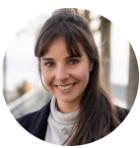
Anaïs Matthey-Junod
EDD 2022 Young Leader
Switzerland
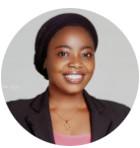
Chiaratou Olayindé Moutairou
EDD 2022 Young Leader
Benin
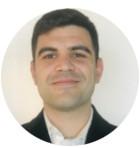
Giovanni Pintor
EDD 2022 Young Leader
Switzerland/Italy

Katarina Polomska
EDD 2022 Young Leader
Chile/Slovakia
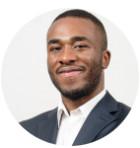
Junior Tagne
EDD 2022 Young Leader
France/Cameroon
Funmilayo Taiwo
EDD 2022 Young Leader
Nigeria
Paa Kwesi Essonh Abak Bonney
EDD 2021 Young Leader
Ghana
Rida Boutros
EDD 2021 Young Leader
Lebanon

Nandin-Erdene Enkhtuvshin
EDD 2021 Young Leader
Mongolia

Kishore Gopal Reddy
EDD 2021 Young Leader
India
Hamid Arrum Harahap
EDD 2021 Young Leader
Indonesia

Suneha Jagannathan
EDD 2021 Young Leader
India
David Watson Mwabila
EDD 2021 Young Leader
Zambia
Chibunna Ogbonna
EDD 2021 Young Leader
Nigeria
Sherine Omondi
EDD 2021 Young Leader
Kenya
Ricardo Andres Pineda Guzman
EDD 2021 Young Leader
Honduras
Ruvimbo Samanga
EDD 2021 Young Leader
Zimbabwe

Daniel Villamar
EDD 2021 Young Leader
Ecuador

Isabella Villanueva-García
EDD 2021 Young Leader
Chile
Richard Wambua
EDD 2021 Young Leader
Kenya
Carlo Angeles
EDD 2019 Young Leader
Peru

Aaron Atimpe
EDD 2019 Young Leader
Ghana
Lourence Balatbat
EDD 2019 Young Leader
The Philippines

Leticia Pinheiro Rizerio Carmo
EDD 2019 Young Leader
Brazil
Inota Cheta
EDD 2019 Young Leader
Zambia
Inès Tatiana Houndjo
EDD 2019 Young Leader
Benin

Rejoice Namale
EDD 2019 Young Leader
Malawi

Akosua Peprah
EDD 2019 Young Leader
Ghana

Val Amiel Vestil
EDD 2019 Young Leader
The Philippines
Olaoluwa Abagun
EDD 2018 Young Leader
Nigeria

Salma Abdalla
EDD 2018 Young Leader
Sudan
Dorcas Apoore
EDD 2018 Young Leader
Ghana
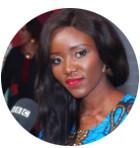
Phonsina Archane
EDD 2018 Young Leader
Republic of Congo
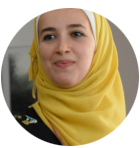
Bushra Dabbagh
EDD 2018 Young Leader
Syrian Arab Republic

Ernesto Hernandez Otero
EDD 2018 Young Leader
El Salvador
Esther Nakajjigo
EDD 2018 Young Leader
Uganda
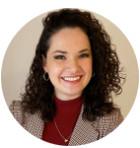
Lais Rocha Leao
EDD 2018 Young Leader
Brazil

Shwetal Shah
EDD 2018 Young Leader
India
Esenam Amuzu
EDD 2017 Young Leader
Ghana

Nishchal Banskota
EDD 2017 Young Leader
Nepal
Richard Dzikunu
EDD 2017 Young Leader
Ghana

Nomindari Enkhtur
EDD 2017 Young Leader
Mongolia

Rachid Ennassiri
EDD 2017 Young Leader
Morocco
Chinenye Ezeakor
EDD 2017 Young Leader
Nigeria
Silvia Victoria Flores Aguilar
EDD 2017 Young Leader
Peru
Courtney Gehle
EDD 2017 Young Leader
South Africa

Farahnaz Ghodsinia
EDD 2017 Young Leader
The Philippines

Alieu Jallow
EDD 2017 Young Leader
The Gambia
Suman Kumar
EDD 2017 Young Leader
Nepal
Kalaba Nkonde
EDD 2017 Young Leader
Zambia
Odessa Primus
EDD 2017 Young Leader
Czech Republic
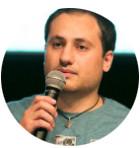
Hovhannes Aghajanyan
EDD 2016 Young Leader
Armenia
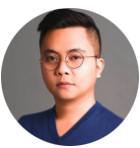
Reuben James Barrete
EDD 2016 Young Leader
The Philippines
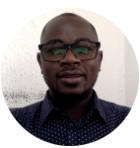
Nestor Dehouindji
EDD 2016 Young Leader
Benin
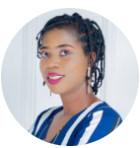
Rose Sakala
EDD 2016 Young Leader
Malawi
Vandinika Shukla
EDD 2016 Young Leader
India
Nada Diouri
EDD 2015 Young Leader
Morocco
Carmen Monges
EDD 2015 Young Leader
Paraguay
Muhammad Kisirisa
EDD 2015 Young Leader
Uganda